"Making Good Men Better"
Free & Accepted Masons of Soquel, California
It is the belief of Paideia Lodge that a man interested in Freemasonry, and who is searching for a Masonic Lodge to join, should look into several lodges before deciding which is best for him. Lodges each have their own way of practicing the Craft, and an individual should find the one he is most comfortable with. We invite you to contact our Master and inquire about our Lodge, and about meeting some of the brothers. Contact information is below.
The other two lodges in the Santa Cruz area are Confidence Lodge and Santa Cruz / San Lorenzo Lodge.
Around 2002, a handful of like-minded Masons came together to form a study group for the purpose of sharing information on subjects such as the lessons inculcated within the three Masonic degrees — philosophy, science, mysticism, spiritualism, symbolism, mythology — any subject that could help an individual come to a better understanding of Truth and the world around him.
After a couple of years, the group had grown and decided it would like to start a Masonic Lodge dedicated to a deeper understanding of these subjects. The group joined a new international movement, the Masonic Restoration Society — Masons dedicated to restoring some of the traditional practices used in Continental Europe and South America.
In approximately 2004, with the help of Academia Lodge in Oakland, California, and the Masonic Restoration Society, this group of Masons formed a Masonic Club with the sole purpose of becoming a Masonic Lodge, and named this club the Paideia Masonic Club. On September 9, 2009, the Paideia Club was granted a dispensation by the California Grand Lodge, giving the club permission to function as a Masonic Lodge under the Grand Lodge of California.
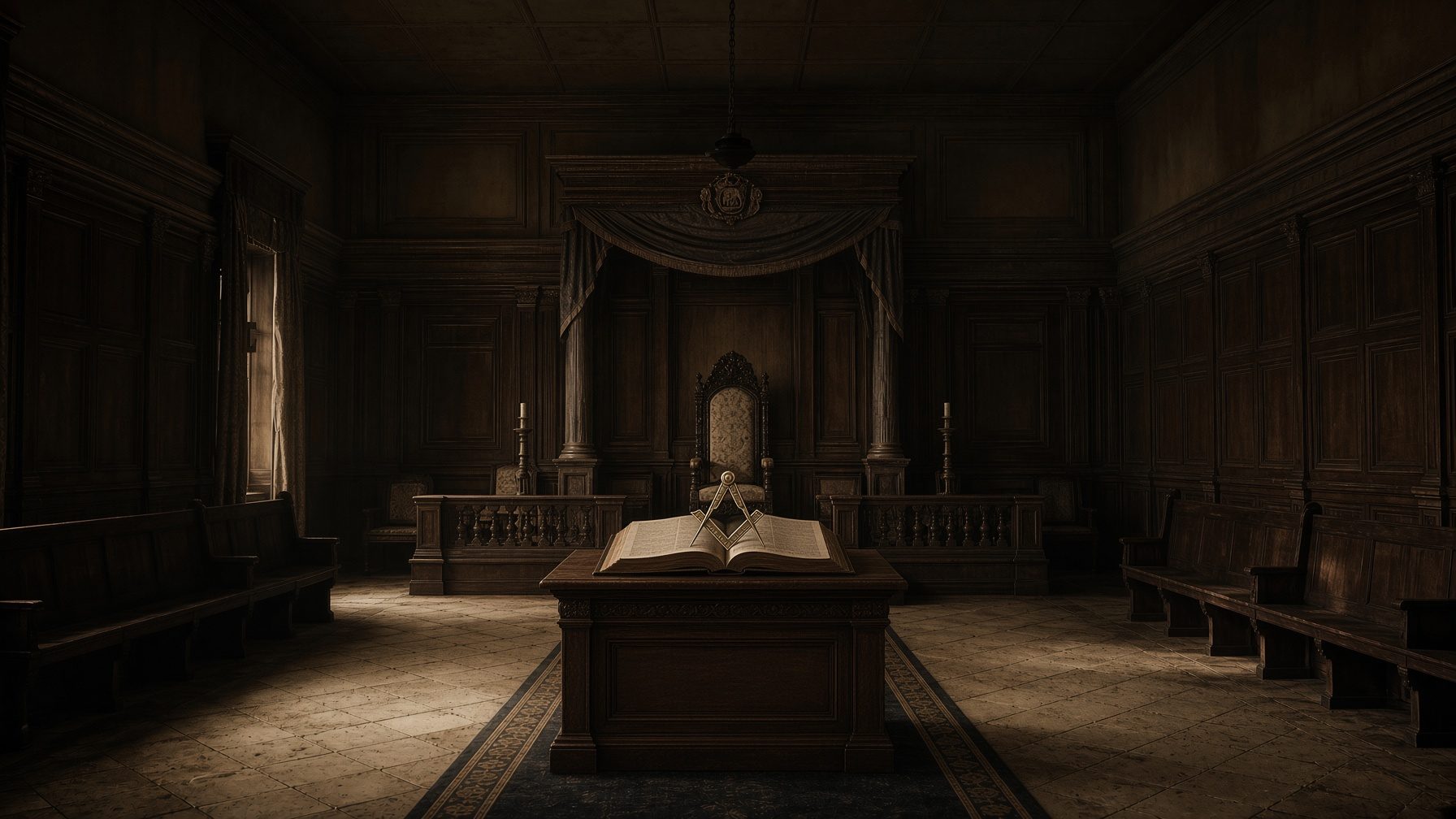
When we became a Masonic Club, we needed a name to become our Lodge name, if or when we were to become a Lodge. Because we were a study group, a brother thought it fitting to have a name reflecting the idea of education. He offered Paideia, and it was unanimously accepted by the brothers.
In an extended sense, Paideia is the equivalent of the Latin humanitas (from which we get "the humanities") — signifying the general learning that should be the possession of all human beings. It had to do with the shaping of the Greek character, and was a concept at the center of the Greek educational genius which is the secret of the undying influence of Greece upon all subsequent ages — the classical Greek system of education and training, which came to include gymnastics, grammar, rhetoric, poetry, music, mathematics, geography, natural history, astronomy and the physical sciences, the history of society and ethics, and philosophy: the complete pedagogical course of study necessary to produce a well-rounded, fully educated citizen.
Paideia in the Greek sense aimed at the creation of a higher type of man. The principle of the Greeks was not individualism but humanism, in a noble and weighty sense. Paideia meant the process of educating man into his true form — the real and genuine human nature. Plato's primary directive for philosophy focused on the strenuous development of the intellect, the will, and the body, motivated by a ceaseless desire to regain the lost union with the eternal. Under Plato, the classical Paideia assumed a deeper, metaphysical dimension in his Academy, holding forth the ideal of inner perfection realized through disciplined education.
Richard Tarnas, The Passion of the Western Mind, pp. 29–30 & 42–3
We are a group of men — brothers and friends — who enjoy coming together for the purpose of expanding our horizons through the exchange of ideas and engaging practices. One evening is for candidates and members to come together and discuss the degrees of Masonry, along with other subjects of interest. Another evening is for our Agape dinner and Lodge of Instruction: we meet in Lodge, hear a paper of interest delivered, and follow it with a dinner during which comments on the paper — and other conversations of interest — are shared.
The primary focus of the Lodge is the candidates and their understanding of Masonry, the delivery of ritual by the officers, and the education of all.
Paideia Lodge is a fellowship of brothers united in a common pursuit of virtue. The Lodge observes traditional Freemasonry and works to cultivate an understanding of traditional societies and institutions among the brethren. The Lodge is dedicated to the preservation of traditional forms and meaningful human fellowship as a means of transmitting wisdom and improving society.
Paideia Lodge has an initiatic focus and charges the brethren to ever remember that striving to improve themselves in Masonry, and assisting candidates and fellow brethren in doing the same, is chief among their duties. The Lodge performs ritual in a solemn manner, and every effort is made to provide the most meaningful initiatic experience for each candidate. The Lodge seeks to create an atmosphere that leads to the positive transformation of the individual.
Paideia Lodge believes that, as the stated purpose of Freemasonry is to make good men better, a man should only be made a Freemason if he is good and capable of being made better. Determining the qualifications of men seeking admission is essential to upholding the integrity of our ancient institution. The investigative process assists the brethren in determining candidates' qualifications, and gives candidates knowledge about the Lodge they are seeking to join.
Paideia Lodge believes that Masonic formation is a slow and careful process requiring great care and effort from both the candidate and the brethren. Each brother advances at his own pace, with sufficient time between degrees for intellectual study and contemplation. The candidate must demonstrate notable improvement in his understanding of Freemasonry, and should present a paper before the Lodge — preferably on the lessons and symbols of his current degree — before advancing to the next.
Paideia Lodge believes a candidate should be able to create positive changes within his everyday life prior to becoming a Master Mason. Having to truly work, expend great effort, and actually improve oneself is the only way to become deserving of this title. If properly observed, every newly raised Master Mason will have grown into a better man, and the bonds of virtue that tie together the brotherhood of humanity will have been strengthened.
Paideia Lodge highly values the fellowship and friendship the Lodge provides, and seeks to further cultivate this by holding an Agape after degrees and a Lodge of Instruction. The Agape is a festive board, with good food and drink consumed in token of Brotherly Love.
Paideia Lodge believes Masonic meetings should promote the understanding of Freemasonry. Brothers present readings of published works, poetry, and music, as well as thoughtful, well-researched papers, as a service to their brethren. Papers usually discuss Masonic symbolism, history, and philosophy, and focus on the spiritual path of self-transformation in the pursuit of virtue.
Paideia Lodge believes Freemasonry teaches duty and service. Brethren are expected to attend all meetings and, if unable to do so, to inform an elected officer in advance. Active participation instills duty and is rewarding in a number of ways — it keeps all brethren connected to the Lodge and affirms that their presence is valued, cultivating an awareness of their self-worth and potential.
Paideia Lodge believes officers should be selected on merit. Serving in any office is a privilege, not a right. Brethren are given positions of responsibility only after demonstrating good faith, the ability to make a serious time commitment, and the ability to perform the necessary duties. The election of the Master is of great importance, reserved for brethren well versed in Masonic teaching, resourceful enough to lead, and whose personal character can serve as an example to be followed.
The goal of Paideia Lodge is the cementing of brotherhood in support of the inner transformation of each individual on the divine path toward self-mastery. The Lodge views the improvement of the individual as the most fundamental aspect of improving society.
We welcome your questions. Reach out to our Master to learn more about the Lodge or to arrange a meeting with the brethren.